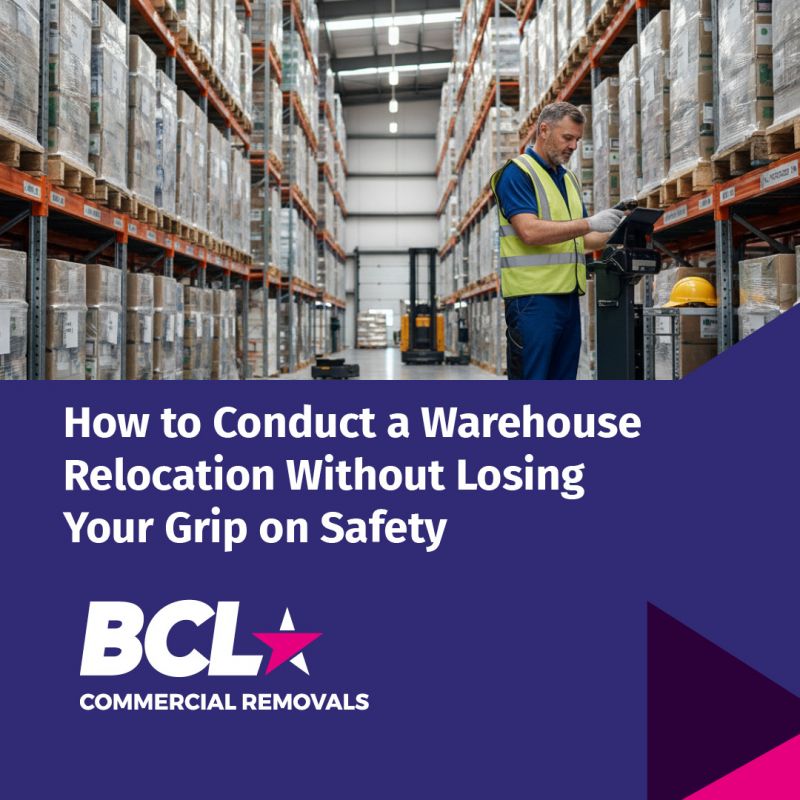
How to Conduct a Warehouse Relocation Without Losing Your Grip on Safety
Wed 10th December 2025Relocating a warehouse isn’t just about shifting shelves and forklifts, it’s a logistical ballet with a hefty dose of health and safety choreography. Whether you're upgrading to a bigger space or streamlining operations, one misstep can lead to costly delays, compliance headaches, or worse; injuries. But with the right planning, your move can be smooth, safe, and surprisingly satisfying.
We asked our Warehouse relocation experts in Cheshire, Stafford and Staffordshire for their best advice in keeping your warehouse relocation compliant, calm, and cleverly coordinated.
1. Risk Assessment: Your Safety Crystal Ball
Before a single box is packed, grab your clipboard (or tablet) and conduct a thorough risk assessment. Think of it as your safety crystal ball; it helps you spot trouble before it strikes. Look out for:
-
Sharp edges and awkward corners
-
Heavy lifting zones
-
Slippery or uneven flooring
-
Confined spaces and high shelving
Document everything, then build a mitigation plan that’s clear, actionable, and tailored to your team’s needs. Bonus points if you colour-code it; safety loves a good spreadsheet.
2. Briefings That Actually Stick
A pre-move safety briefing isn’t just a tick-box exercise. It’s your chance to align everyone on the same page, ideally one that doesn’t involve a trip to A&E. Cover:
-
Manual handling techniques (bend those knees!)
-
Equipment operation protocols
-
Emergency exits and procedures
-
Who’s doing what, when, and where
Make it interactive. Quizzes, role-play, or even a “safety bingo” can help the message land without sounding like a lecture.
3. Gear Up with the Right Kit
Moving a warehouse without the right equipment is like trying to build flat-pack furniture with a spoon. Invest in:
-
Well-maintained forklifts, pallet jacks, and hoists
-
PPE for all staff; gloves, hard hats, high-vis vests, and steel-toe boots
-
Signage to guide traffic flow and highlight hazards
Check everything twice. If it’s not fit for purpose, it’s not fit for your move.
4. Bring in the Pros
Hiring a certified removals team with warehouse experience is a game-changer. They know how to handle bulky machinery, navigate tight spaces, and stay compliant with health and safety regulations. Plus, they’ll likely spot risks you hadn’t considered.
5. Inspect Before You Invest (Your Stock)
Before you move in, give the new warehouse a top-to-bottom inspection. Look for:
-
Secure racking and shelving
-
Clear walkways and emergency exits
-
Adequate lighting and ventilation
-
Fire safety measures and signage
Fix any issues before your inventory arrives. It’s easier to patch a pothole than to re-stack a toppled pallet.
6. Supervise Like a Safety Hawk
During the move, assign supervisors to oversee each stage; loading, transport, unloading, and setup. Their job? To ensure safety protocols are followed, spot emerging risks, and keep the team focused. Think of them as your health and safety hawks, swooping in before chaos takes flight.
7. Post-Move Review: Lessons in Hindsight
Once the dust settles, gather your team for a post-move review. Document:
-
What went well
-
What could be improved
-
Any incidents or near misses
-
Suggestions for future moves
Use this feedback to refine your warehouse relocation playbook. Every move is a learning opportunity, and your next one will be even smoother.
By putting health and safety front and centre, you’re not just ticking compliance boxes, you’re protecting your people, your assets, and your reputation. So plan smart, brief well, and don’t forget to celebrate once the last box is unpacked. You’ve earned it.